
What is Best Practice? A best practice is a technique or methodology
that, through experience and
research, has been proven to reliably lead to a desired result.
To the best of my knowledge (which stems from over 25 years as a wild game chef) I have never seen
or heard of anyone even attempt to create a “best practice” approach for cooking wild game. While there are no
rules in my opinion when it comes to cooking, there can be various methodologies that are heavily influenced by where you
live; some infuse your ethnicity or what you have personally experienced, while other practices are tied to what you know
to this point in your life and tend to define your cooking style. There are in fact techniques that when put into practice,
yield tremendous consistency concerning the preparation and outcome of your wild game. The goal of WildCheff has
always been and will continue to be – to educate and inspire sportsmen and game enthusiasts on how to Master
the basics of game cooking, and to help you develop creativity so you can fully comprehend and appreciate the diversity that
wild game offers.
Although many of us love all types of game, the majority of
hunters that go afield every year for some type of venison variety; deer being the most sought after North American game animal
- so, my initial focus in this column will be in helping you address learning some of the basic fundamentals of cooking venison
in general.
There are many ad-hock game cooks out there that simply get by with whatever method comes to mind
at the moment. Some cooks throw a pat of butter in a pan and a bit of whatever seasoning is on hand; in many cases the seasoning
is severely outdated and has been in the cupboard for a number of years, while others are of the belief that if they just
throw some marinade, salad dressing or creamed soup over it, that it will at least it add some missing flavor they seek, or
tame what they may consider the gaminess of the meat. Others like to use ingredients like salt pork to cook their game with;
which is fine so long as you understand that it may adversely affect your health someday. I have to admit that I cannot make
a quality pot of beans without it.
Who is right, and who is wrong???! The best way
to answer that question is to first ponder what a proper cooking method is vs. no established method at all. While everyone
is entitled to their opinion, I think we would all agree that in most cases some type of fat content needs to be added; this
will ensure that your game stays moist; it also enhances the flavor which will make for a better recipe; bacon, olive oil
and butter being the most predominant three choices.
If you consider learning any
subject, hands-on experience and repetition is the best teacher. The more you cook and try different methods, the more you
will find out what works best and what doesn’t work at all. It is even better when you can shortcut the learning curve
by gaining knowledge from somebody who has already made all the mistakes. Benjamin Franklin once made a statement that in
order for him to invent electricity it took him over 1000 times of trial and error to find what method worked. I’m sure
you won’t have to cook your game 1,000 ways to get it right, but I would make some suggestions, that if taken will yield
you a consistency in your game cooking.
Recently, a gentleman reached out to me as he was
having severe challenges with cooking sea ducks (Eiders). He loved to hunt them, but stated that when attempting to cook them,
he could not choke them down and he was ready to hang up the shotgun. I explained to him that you have to remember that you
are what you eat, and you have to consider that game animals are subject to the environment that they live in. Sea ducks are
one of the rare exceptions where marinating does help produce a better flavor so that they can be enjoyed. I prescribed a
couple of marinades that are made with fruit juices, olive oil and the right herbs and he is now off and running again.
My whole thought process for creating WildCheff Spice Blends was largely due to
the fact that there has never been a series of products that I’ve known to exist in my 27 years of hunting that can
help the novice or experienced game cook to produce consistent and diverse game dishes and flavor combinations that are of
high quality. Yes, you can purchase the all-in-one powdered seasonings out there, but they are cheap and do not truly let
your game shine. As with all things, you get what you pay for. My goal is to provide hunters and game enthusiasts with fresh
herbs and spices, and a means to cook anything they could imagine with your game; by supplying you with customized herb blends
that offer you clear direction based on the style of game dishes you’d like to enjoy; whether it be Tex/Mex or Southwestern,
BBQ, rustic styled, stir-fried or any ethnic dish you can imagine – French, Irish, Italian/Tuscan, German, Swedish,
etc.
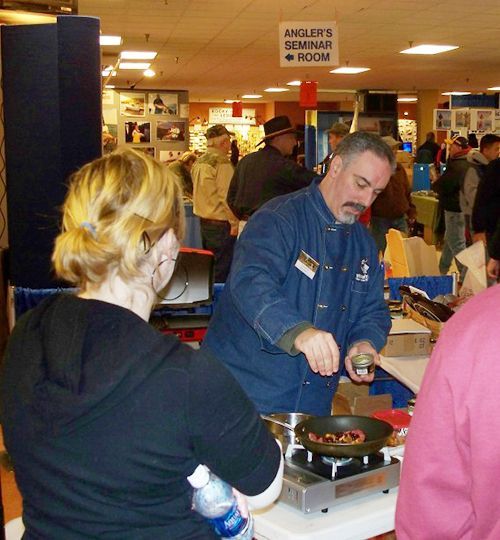
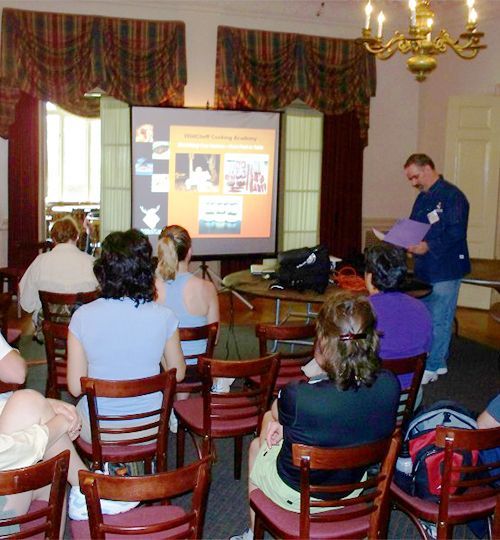
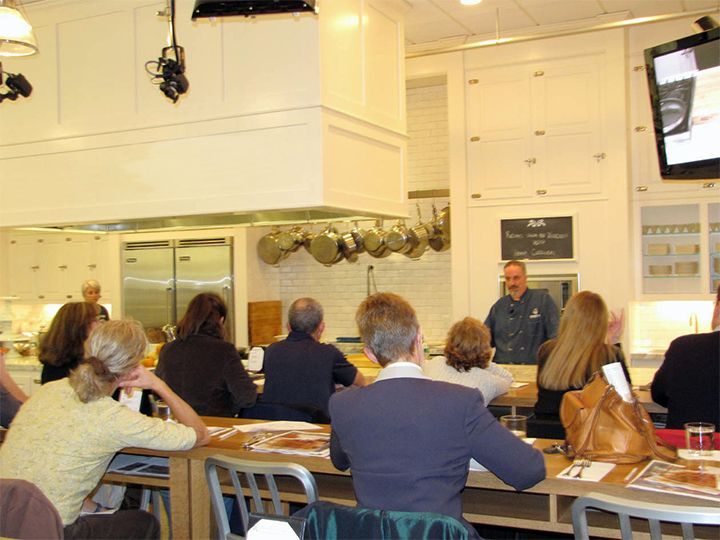
In my WildCheff – Wild Game Cooking Clinics I teach that venison is extremely versatile
and can be enjoyed in multitudes of ways. It can be sautéed, broiled, grilled, roasted, stir-fried and stewed. It has
a distinct and wonderful flavor that makes you yearn for more. Conversations tend to always focus on the tenderloin or back-straps,
but you have to look at all venison cuts as worthy for some type of sumptuous recipe. When you feel challenged with
the less desirable cuts, don’t get frustrated. Take the less tender cuts and make burger with them, which can be used
in a host of recipes from gourmet burgers to meatballs, stuffed peppers, shepherd’s pie, stuffed cabbage, in Tex/Mex
dishes, chili and in red sauce for lasagna and pasta dishes, as well as for making sausage, which can be enjoyed morning,
noon and night in countless recipes. Lower end cuts of venison can be used to make great stews and braised dishes.
When cooking venison steak, tenderloin and back-straps the key is to cook until it is medium rare
or just a hair beyond and then pull it from the heat and let it rest for a few minutes before cutting into it. This lets the
juice redistribute throughout the meat so you end up with extremely tender and delicious venison.
Never
drown your venison in marinades, canned soup or things like Italian dressing. You can enhance the flavor
of your game with wine, beer, and various brandy’s. Dried fruits like cranberry, cherry and blueberry
can help add another dimension to your dishes. Fresh earthy veggies like onions, shallots and mushrooms, and aromatic herbs
like rosemary, sage, thyme and garlic can also be of tremendous benefit to your recipes. It’s all about exercising some
creativity. The key to remember is that you want to accent your game with flavors that help it to excel; but don’t replace
the flavor of the game – your game should always be the star of your recipe!
There
is an old story of a woman whose husband asked her why she cut the end of her roast every time she cooked one. She stated
to her husband that when she watched her mother do it over the years so she followed suit. They went to her mother and asked
why she did it and the mother stated that was how her mother always did it. So, they went to the grandmother and asked her
why she always cut the end of her roast off before placing it in the pan and the grandmother replied - “Because my pan
wasn’t big enough!” When you are done laughing, you will get the point. Don’t just pour something over you
game because that is all you have ever done or seen others do. Pouring things over your game is simply a way to get out of
implementing methods and/or techniques that will make your game taste incredible vs. average. The bottom line is that you
did not put in all that effort in harvesting an animal to not enjoy the taste of it. There will always be a segment of hunters
that just like it plain and simple, and that’s o.k. – but many hunters and game enthusiasts desire to create food
experiences that help them to discover new and exciting ways to enjoy their game.
How
do you eat an elephant??? One bite at a time! The next time you feel compelled to marinate your game steaks, medallions or
loins - drizzle some olive oil over it and coat it with fresh herbs and spices that will accent it and not mask the true flavor
of it. Let it sit in the marinade for 30 minutes to 4 hours and then set it on the counter and bringing it to room temperature
before preparing it the way you like. Make sure it is always pink in the middle when you eat it and enjoy some great tasteful
memories!!!
Bon appétit and happy hunting,
Denny Corriveau
President/Master Game Chef
Mossy Oak National Pro-Staff Game Chef
WildCheff Enterprises, LLC